
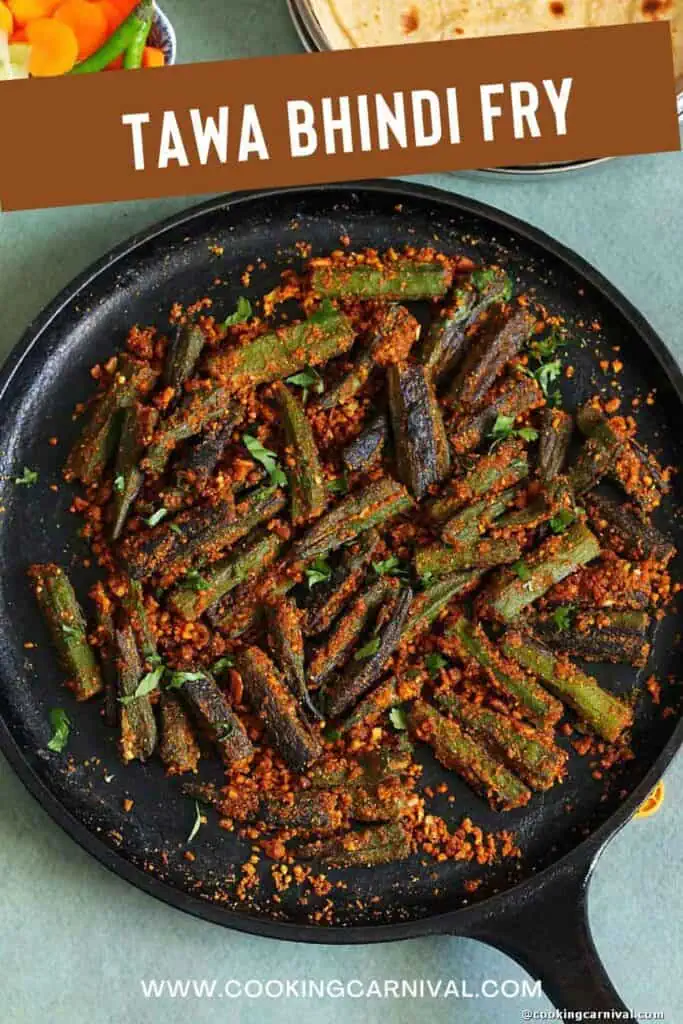
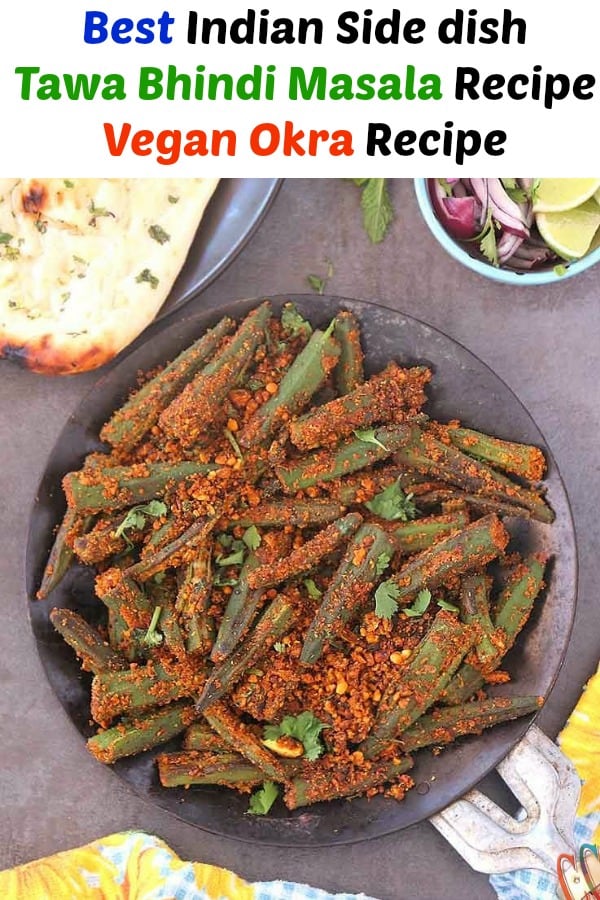
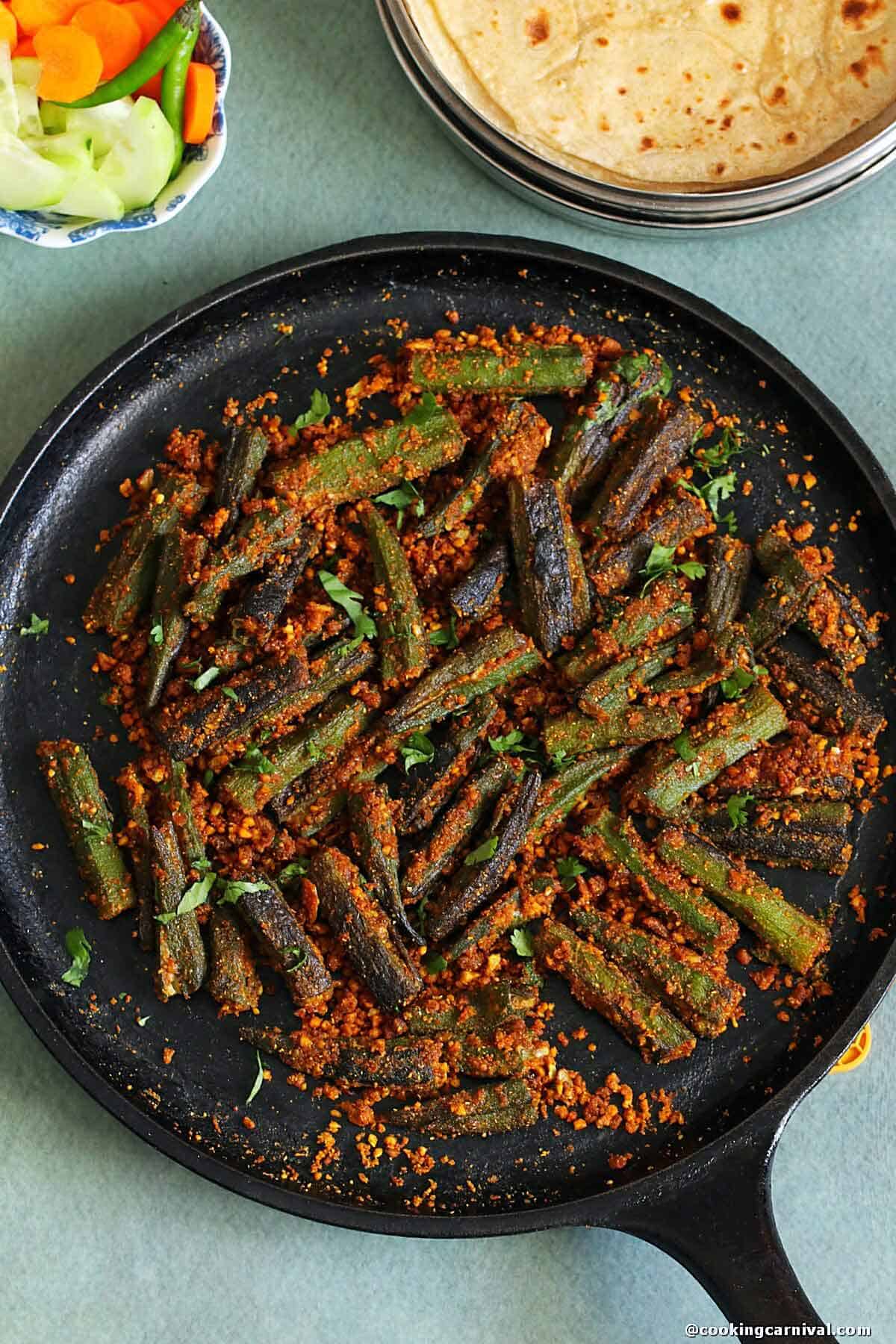
Vegan and gluten-free, this Tawa Bhindi recipe is a dry stir-fry made with Okra, besan, peanuts, Garlic, and Indian spices, and can be prepared in under 30 minutes for various serving sizes. It pairs well with rotis, parathas, or dal-chawal. The recipe is a simplified version of Gujarati Bharelo Bhindo (Bharva Bhindi), where the masala is sprinkled on top rather than stuffed into the Okra, making it quicker to prepare. It is suitable for lunchboxes, parties, busy weekday meals, and gatherings.
Jump to:
About Tawa Bhindi recipe
Okra, also known as Bhindi in Hindi, is an absolute superstar in Indian cuisine! It might just be the second most beloved ingredient after paneer, especially among kids - I mean, who doesn’t adore Bhindi? I’ve yet to find a soul that doesn’t sing its praises!
Every Indian household has its unique take on bhindi fry, and today, I’m so excited to share the recipe I learned from my mom! This Vegetarian Bhindi dish is a delightful blend of crispy yet soft texture and flavorful spices, achieved through shallow frying and sprinkled with a secret gram flour masala that packs a punch.
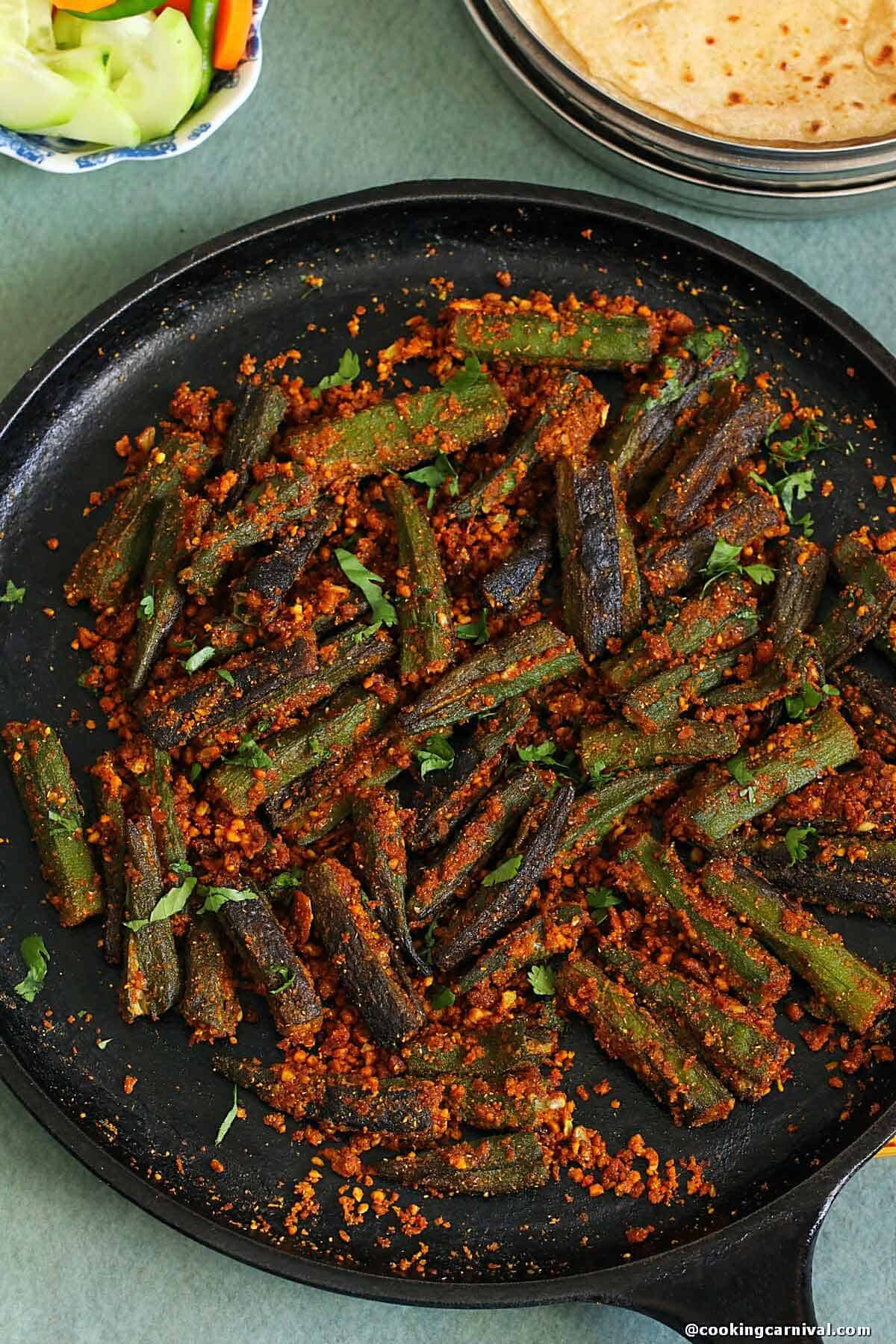
Cooking it on a cast-iron tawa gives it an irresistible taste and texture that transports you straight to culinary bliss. I kick off the magic by sautéing the Okra in oil first, which not only prevents it from getting slimy but also elevates the dish to that coveted restaurant-style perfection.
You can pack this irresistible Bhindi in lunchboxes, rolled between rotis or parathas, and you’ve got a meal that will have your kids and spouse begging for more!
My ultimate comfort food combo? Roti + dal + Tawa Bhindi = pure bliss, and honestly, I could savor this combination every single day for the rest of my life. Come, let’s indulge in this deliciousness together!
Ingredients required
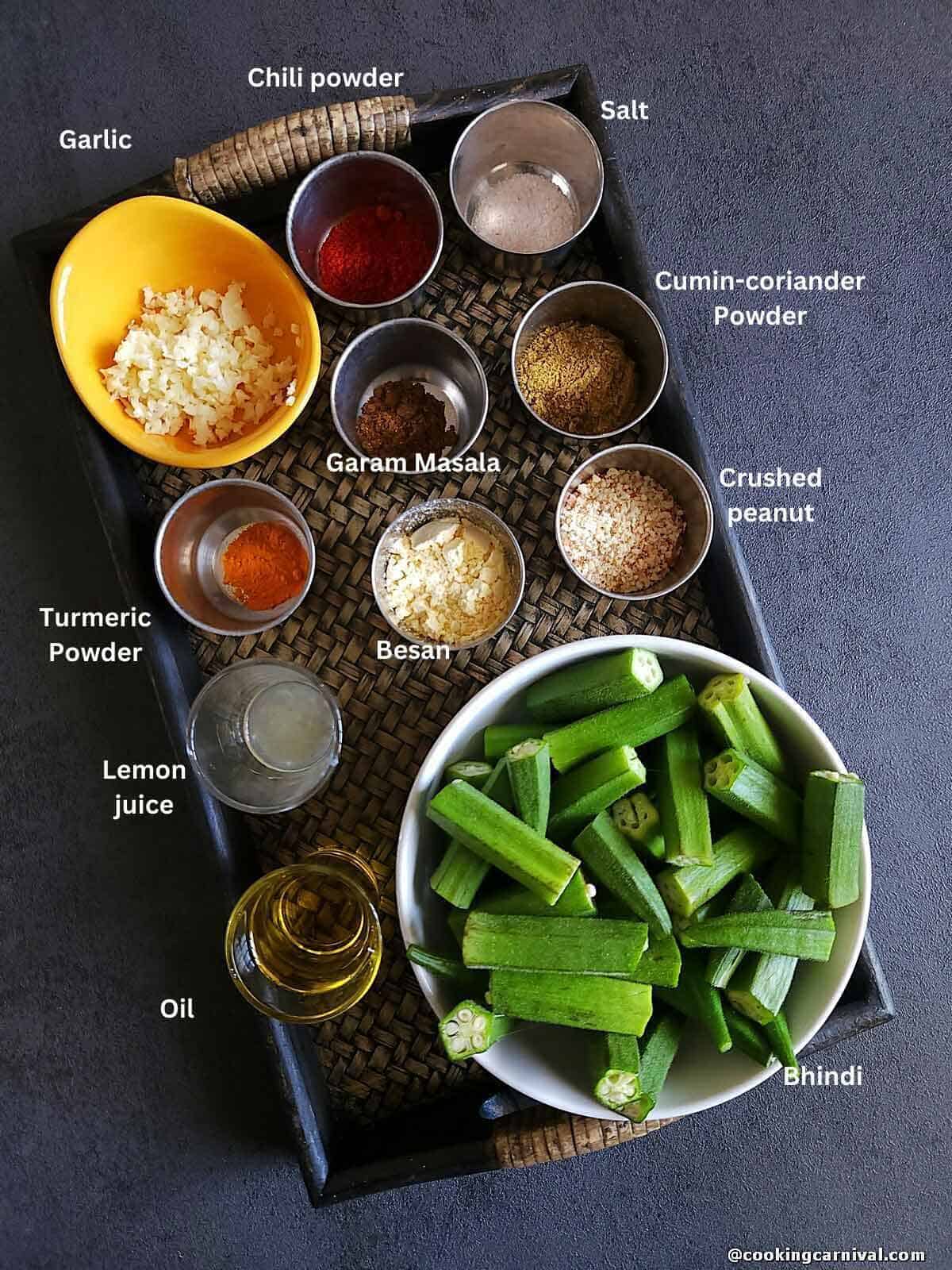
- Bhindi/Okra – Choose young, tender Okra with small pods. Larger pods have large seeds, which are difficult to digest. The key is to choose tender green Okra, and when you snap the end, it should break off easily.
- Besan (gram flour) – to bind the spices well.
- Aromatic – Garlic gives a pungent taste and smell. Use freshly peeled garlic cloves for the best flavor. You can also use an onion. Fry the onions with Bhindi.
- Peanut: This gives a nutty taste and binds all the other spices well.
- Spices – I have used Cumin, coriander powder, turmeric powder, salt, garam masala, and Kashmiri red chili powder.
- Oil – I have used cold-pressed peanut oil, which gives a very authentic Gujarati taste.
- Garnishing – lemon and Cilantro
Step-by-step process
Wash and pat dry Bhindi with a kitchen napkin (It should be completely dry). Cut off the crown and tip, Slit the Okra lengthwise but do not cut it in half, and cut the Okra into 2-inch pieces. Be sure to check for worms inside the pods, and discard the pods if you find any. Keep it aside.
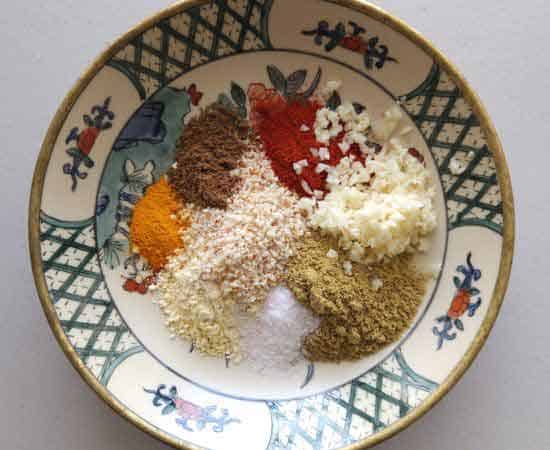
Take besan, Kashmiri Red chili powder, salt, Cumin and coriander powder, garam masala, turmeric, crushed peanuts, and Garlic in a large mixing bowl. Mix them very well.
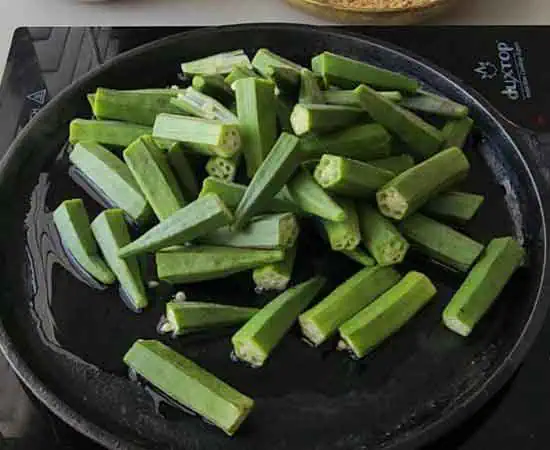
Heat 4 tablespoons of oil in a cast-iron tawa. Place the Okra, give it a quick stir. Close the lid and cook them on a low flame for 8 to 10 minutes or until they are tender. Stir once or twice in between. Make sure your flame is on low.
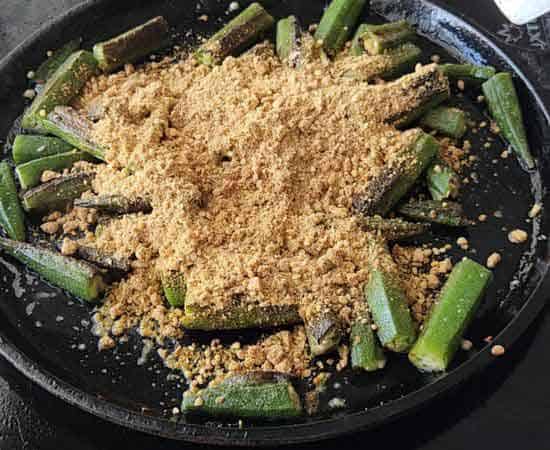
Once Bhindi is tender and cooked, sprinkle the prepared masala and the remaining 2 tablespoon of oil. Mix it gently. Let the Bhindi and masala cook for 2 to 3 minutes on a low flame.
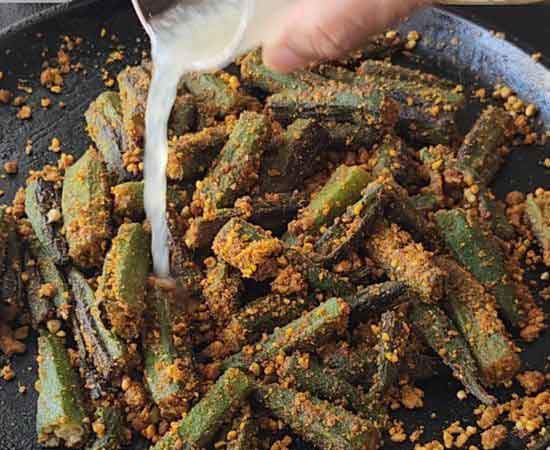
Now add Cilantro and lime juice. Stir and switch off the flame.
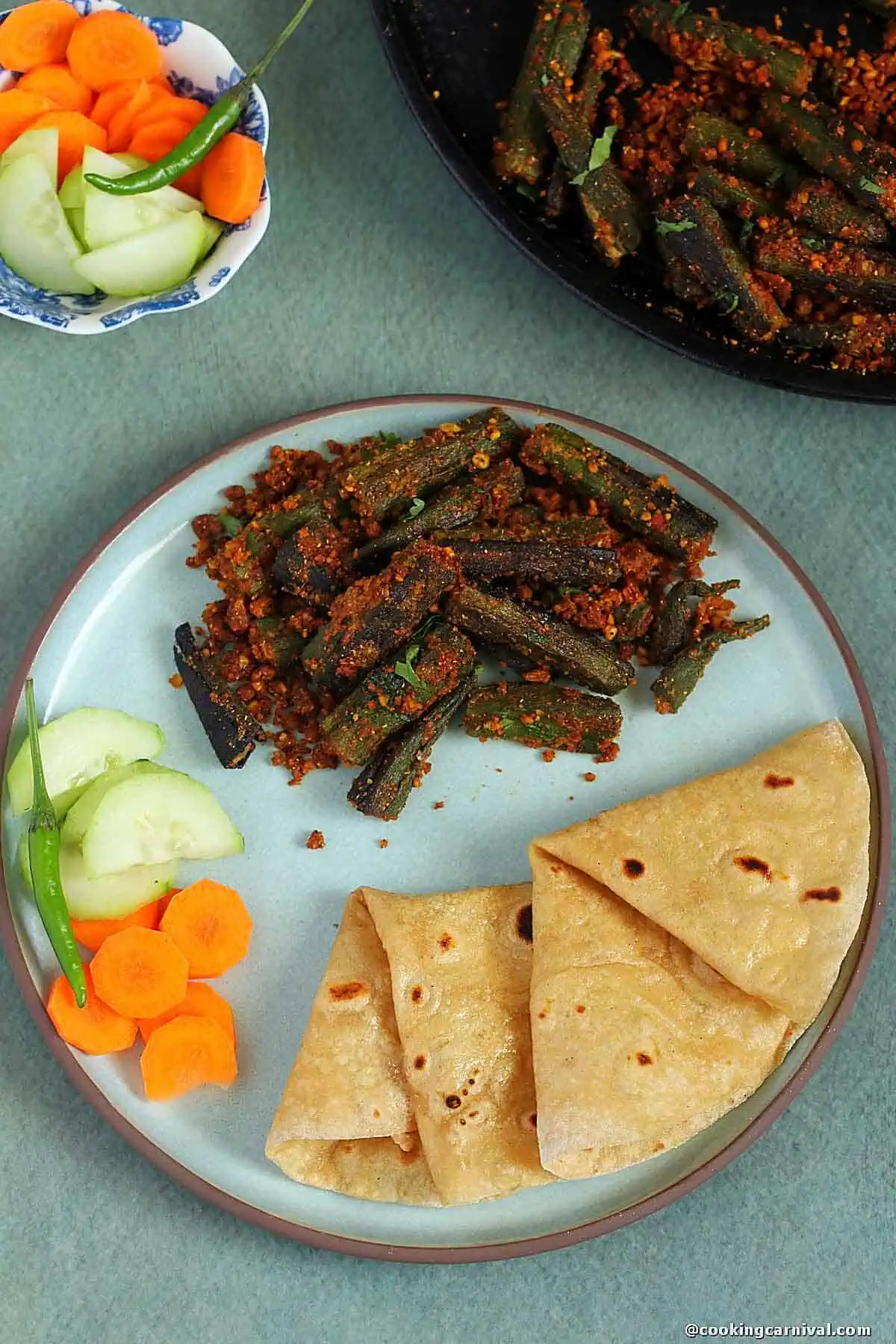
Your Tawa Bhindi fry is ready. Serve it hot with Phulka Roti, Paratha, or with dal-rice.
Storage Suggestions
Tawa Bhindi can be stored in an airtight container in the refrigerator for 4-5 days. To ensure optimal taste, reheat the dish in either a microwave or on a stovetop until it is served hot.
For longer-term storage, this dish can be frozen for up to one month. When ready to enjoy, thaw the Bhindi, reheat it, and serve it warm.
Serving Suggestions
Tawa Bhindi is ideally paired with roti or rice and dal, making it a comforting meal option. This flavorful bhindi masala can also complement various types of flatbreads, including chapati, naan, paratha, and poori.
To enhance the dining experience, consider incorporating Tawa Bhindi into a thali. This can include a combination of rice, dal, Puri/roti, keri no ras, Suji halwa, or any other sweet, along with accompaniments such as dhokla, samosa, yogurt or raita, salad, and pickle. To complete the meal, serve with a refreshing glass of masala chaas.
Pro-tips
- If you don’t have lemon juice, substitute it with amchur (dried mango powder). Use peanut or mustard oil for authentic Indian flavors; if unavailable, any oil will work.
- Choose young, tender Okra with small pods, as larger ones have tough seeds. Ensure they snap easily when broken.
- Wash and wipe the Okra before chopping.
- Before adding any spices, fry the Okra in a bit of oil to evaporate excess water and avoid sliminess. An air fryer is also a good option.
- To make Tawa aloo bhindi masala, add potatoes.
- For a Jain version, skip the Garlic.
- Use a good-quality, heavy-bottomed pan, such as cast iron, to prevent sticking. You can use any heavy-bottom pan.
- Cooking Okra over high heat can quickly brown the exterior of the pods, but it does not effectively eliminate the natural sliminess that is undesirable. To minimize the sliminess, it’s essential to cook this dish on a low flame and avoid stirring the Okra too frequently during cooking; excessive movement can disturb the pods and release more of their mucilage, leading to increased sliminess. Opting for a careful balance of heat and minimal agitation can yield perfectly textured Okra. Do not skimp on the oil: You will need the quantity of oil specified to sauté the Bhindi. Sauteing helps reduce the sliminess, so do not try to cut back on oil.
Quick FAQs
Cooking Bhindi, or Okra, often presents a common challenge: its sliminess. This characteristic is due to the release of a substance called mucilage. To minimize this slimy texture, several effective techniques can be used.
1. Wash and pat dry the Okra before chopping. Cutting wet Okra can significantly increase its sliminess.
2. Frying the Okra in a small amount of oil before adding any spices is beneficial. This method helps to eliminate the slimy texture, typically taking around 8 to 10 minutes over low to medium heat.
3. It’s crucial to avoid cooking on high heat, as this can lead to browning before the sliminess has reduced.
4. Using a sharp knife for chopping is another important tip; a blunt knife can cause the Okra to become stickier.
5. Bhindi generally requires more oil for cooking, so it’s important not to skimp on oil.
6. Incorporating a souring agent, such as dry mango powder or lemon juice, during the cooking process can further help reduce sliminess.
7. When sautéing or cooking Bhindi, it’s best to stir infrequently; tossing occasionally rather than constant stirring helps maintain a desirable texture.
While fresh Okra yields the best results for Bhindi Masala, frozen cut Okra is a convenient alternative that can be found at Indian grocery stores. To prepare frozen Okra, first spread the pieces evenly between paper towels to allow them to thaw. After thawing, gently dab away any excess moisture with the paper towels. This step is crucial for achieving the right texture in the dish.
If you don’t have a tawa, there’s no need to worry. Tawa Bhindi Masala can be successfully prepared in a variety of cookware, including a heavy-based frying pan (skillet), a casserole dish, or a regular stainless steel pan. The recipe is quite forgiving and can accommodate different cooking methods.
More Bhindi recipe
Have you tried this Recipe? Please feed us with your feedback, ★ star ratings, and comments below.
You can also FOLLOW me on FACEBOOK, INSTAGRAM, and PINTEREST for more fabulous recipes and updates.
Subscribe to our YouTube Channel for tasty and easy video recipes.

Tawa Bhindi Fry recipe
Ingredients
- 500 grams Bhindi Also known as Okra / Ladies finger
- ¼ cup Gram flour Besan
- 1 tablespoon Kashmiri Red chili powder
- 2 tablespoon Cumin and coriander powder Coriander powder 1 and ½ tablespoon and cumin powder ½ tbsp
- ½ teaspoon Turmeric powder
- 1 teaspoon Salt to taste
- 1 teaspoon Garam Masala
- 3 tablespoon Crushed Peanut
- 1 tablespoon Garlic finely chopped
- 6 tablespoon cold pressed peanut Oil (4+2)
- 1 teaspoon Lemon Juice
- Cilantro / Coriander for garnishing

Method
- Wash and pat dry Bhindi with a kitchen napkin (It should be completely dry). Cut off the crown and tip, Slit the Okra lengthwise but do not cut it in half, and cut the Okra into 2-inch pieces. Be sure to check for worms inside the pods, and discard the pods if you find any. Keep it aside.
- Take besan, Kashmiri Red chili powder, salt, Cumin and coriander powder, garam masala, turmeric, crushed peanuts, and Garlic in a large mixing bowl. Mix them very well.
- Heat 4 tablespoons of oil in a cast-iron tawa. Place the Okra, give it a quick stir. Close the lid and cook them on a low flame for 8 to 10 minutes or until they are tender. Stir once or twice in between. Make sure your flame is on low.
- Once Bhindi is tender and cooked, sprinkle the prepared masala and the remaining 2 tablespoon of oil. Mix it gently. Let the Bhindi and masala cook for 2 to 3 minutes on a low flame.
- Now add Cilantro and lime juice. Stir and switch off the flame.
- Your Tawa Bhindi fry is ready. Serve it hot with Phulka Roti, Paratha, or with dal-rice.
Nutrition
Notes
- If you don’t have lemon juice, substitute it with amchur (dried mango powder). Use peanut or mustard oil for authentic Indian flavors; if unavailable, any oil will work.
- Choose young, tender Okra with small pods, as larger ones have tough seeds. Ensure they snap easily when broken.
- Wash and wipe the Okra before chopping.
- Before adding any spices, fry the Okra in a bit of oil to evaporate excess water and avoid sliminess. An air fryer is also a good option.
- To make Tawa aloo bhindi masala, add potatoes.
- For a Jain version, skip the Garlic.
- Use a good-quality, heavy-bottomed pan, such as cast iron, to prevent sticking. You can use any heavy-bottom pan.
- Cooking Okra over high heat can quickly brown the exterior of the pods, but it does not effectively eliminate the natural sliminess that is undesirable. To minimize the sliminess, it’s essential to cook this dish on a low flame and avoid stirring the Okra too frequently during cooking; excessive movement can disturb the pods and release more of their mucilage, leading to increased sliminess. Opting for a careful balance of heat and minimal agitation can yield perfectly textured Okra. Do not skimp on the oil: You will need the quantity of oil specified to sauté the Bhindi. Sauteing helps reduce the sliminess, so do not try to cut back on oil.
- Post is updated with new pics and more information, originally published in 2016.
Private Notes
Tried this recipe?
Let us know We would love to hear your thoughts! Please leave your comments, ratings, and any ideas or changes you think could help us make our recipes even better. Thank you for your feedback!Warm Regards,
Dhwani.


Very impressive recipe, its a delight to taste.
Thanks for info.
Thank you Asif Pasha !!!
looks very nice n tasty.
Thanks You very much Deeksha!!!! 🙂
its very tasty
Thank you Maya 🙂
Hi dhwani… juz tried ur tawa bhindi.. it came out juz superb.. v tasty.. Thank u v much for d wonderful n easy receipe….
Looks so tempting, I can eat that bhindi plain. Yumm!
Thanks, Freda!!
Yummy!
Thanks!
Tried this recipe today.. it was awesome !!
Glad to know. Thank you! 🙂
It typically Gujarati receipe. We in North India do not use peanut s In cooking. Nor wecall dhana for corriander seeds